



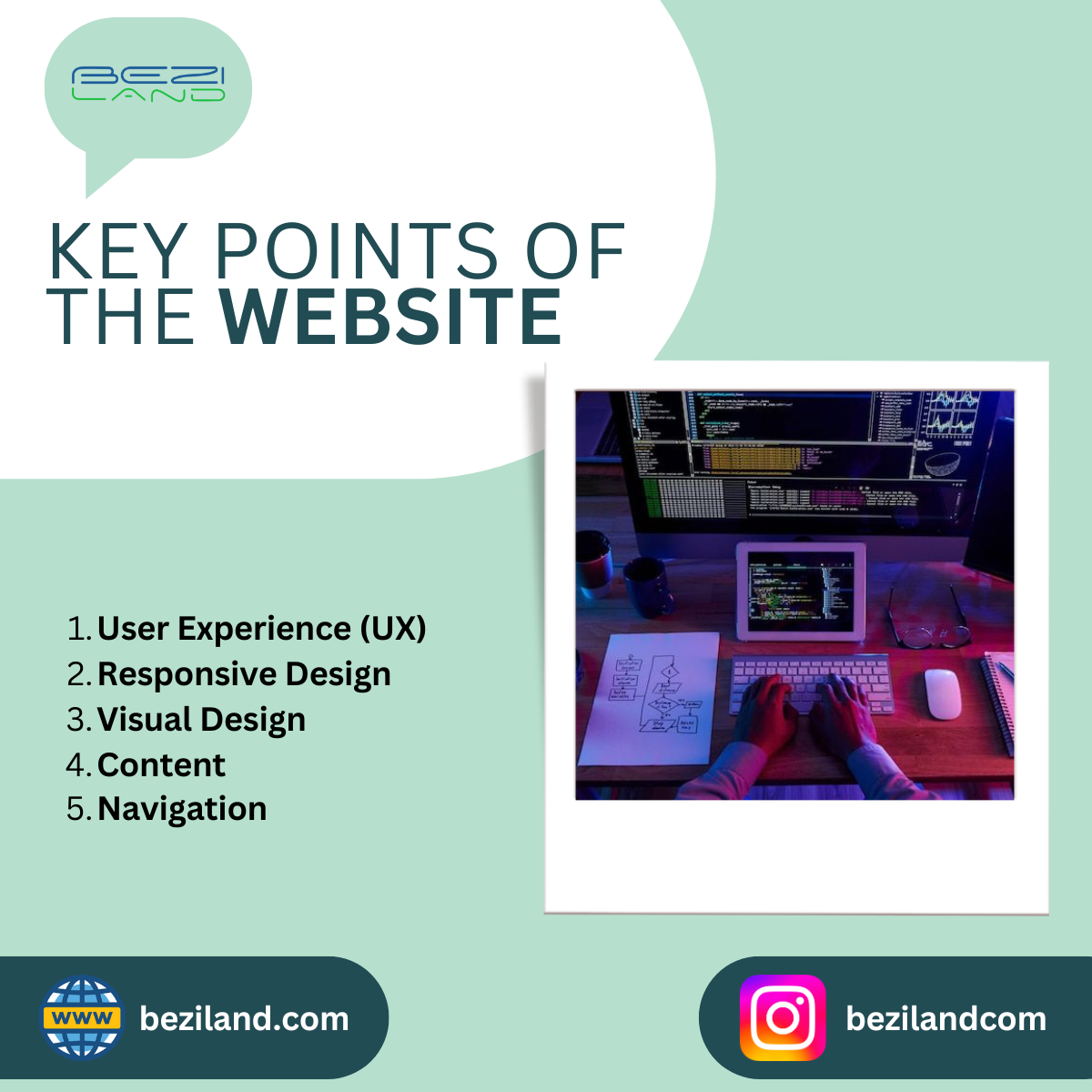
Website design encompasses a range of key points, from aesthetic appeal to functionality and usability. Here are some essential elements
User Experience (UX):
Ensure ease of navigation.
Design intuitive interfaces.
Optimize loading times for all devices.
Prioritize accessibility for users with disabilities.
Responsive Design:
Make sure your website looks good and functions well on various devices and screen sizes.
Utilize CSS media queries to adjust layouts based on device characteristics.
Visual Design:
Choose a visually appealing layout and color scheme.
Use high-quality images and graphics.
Maintain consistency in design elements across pages.
Content:
Provide clear and concise information.
Use engaging and relevant multimedia content.
Prioritize readability with appropriate fonts, sizes, and spacing.
Navigation:
Implement a logical and intuitive navigation structure.
Use breadcrumbs, menus, and sitemaps to help users find what they need.
Ensure all links are working correctly.
Call to Action (CTA):
Include clear and compelling CTAs to guide users towards desired actions.
Make CTAs prominent and strategically placed throughout the website.
Typography:
Choose readable fonts that align with your brand identity.
Use hierarchy to emphasize important content.
Ensure sufficient contrast between text and background for readability.
Loading Speed:
Optimize images and other media to reduce load times.
Minimize HTTP requests and use browser caching.
Consider using a Content Delivery Network (CDN) for faster delivery of assets.
Search Engine Optimization (SEO):
Use relevant keywords in page titles, headings, and meta descriptions.
Create descriptive and keyword-rich URLs.
Ensure proper HTML markup and structured data for search engines to understand your content.
Security:
Implement HTTPS to encrypt data transmission.
Regularly update software and plugins to patch security vulnerabilities.
Use strong authentication methods for user accounts, if applicable.
Analytics:
Integrate web analytics tools like Google Analytics to track website performance.
Analyze user behavior to make informed decisions for improvements.
Mobile Optimization:
Prioritize mobile responsiveness to accommodate the increasing number of mobile users.
Use mobile-specific features like click-to-call buttons or location-based services if relevant.
By focusing on these key points, you can create a website that not only looks great but also provides a positive user experience and achieves your business goals.