


Technical SEO Simplified for Beginners
Table of Contents
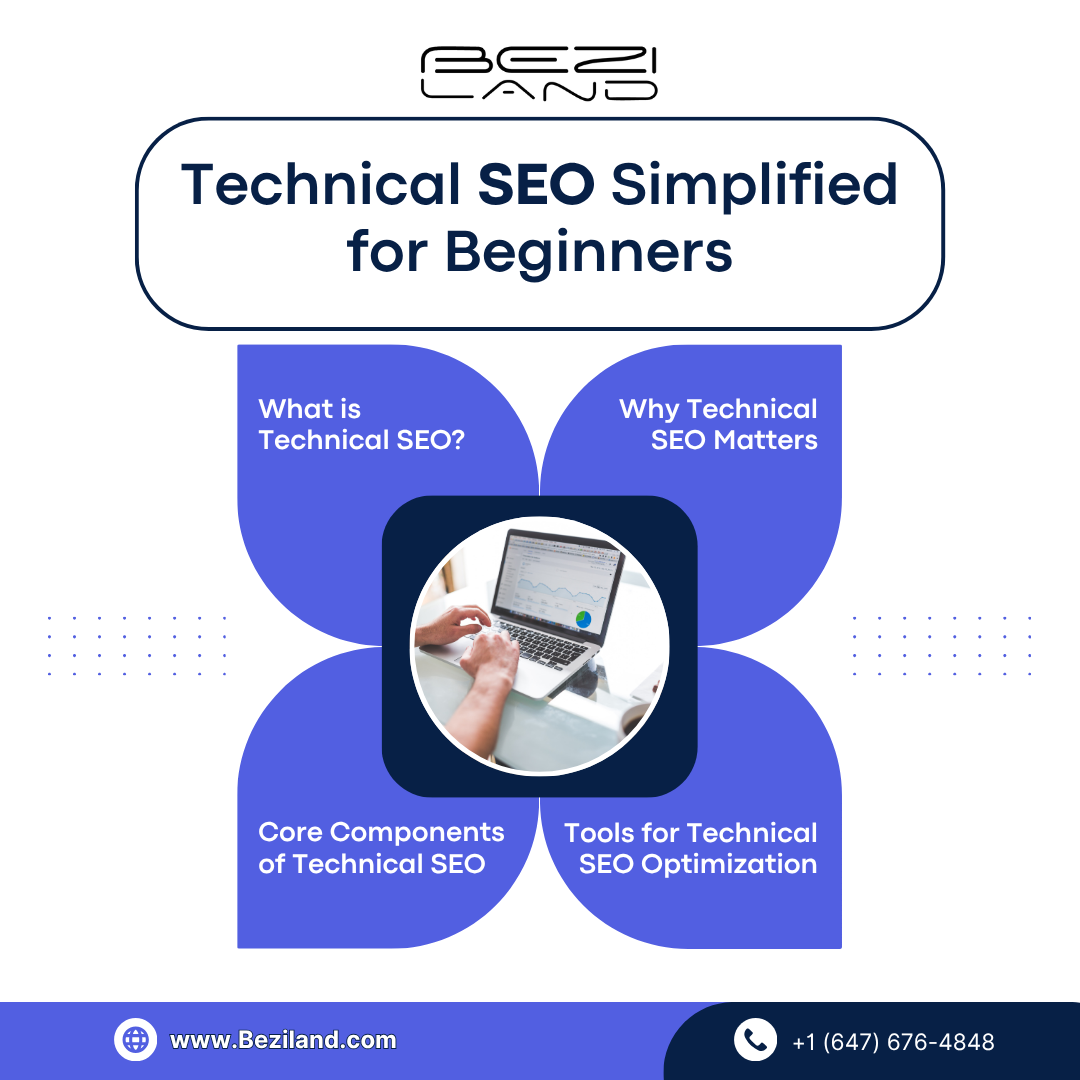
What is Technical SEO?
Technical SEO refers to optimizing your website’s infrastructure to help search engines find, understand, and index your content effectively. Unlike on-page SEO (which focuses on content and keywords), technical SEO ensures that your website’s backend — code, speed, structure, and security — meets the requirements of search engine algorithms.
Example:
Imagine writing a book (your website’s content) but not binding the pages properly (your website structure). No matter how great your story is, readers (search engines) can’t go through it smoothly. That’s what happens when your technical SEO is weak.

Why Technical SEO Matters
Search engines like Google use complex algorithms to rank websites. However, before they can rank your content, they must crawl and index it. Technical SEO ensures that this process happens efficiently.
Benefits of Technical SEO:
-
Improved crawlability and indexing: Helps search engines understand your site structure.
-
Better user experience: Fast, mobile-friendly sites retain more visitors.
-
Higher rankings: Search engines reward technically optimized sites.
-
Increased organic traffic: More visibility leads to more clicks and conversions.
 Core Components of Technical SEO
Crawling and Indexing
Search engines use bots (called crawlers or spiders) to scan your website. Proper crawling and indexing ensure that your content appears in search results.
Best Practices:
-
Create a robots.txt file to control what search engines can access.
-
Ensure all important pages are linked internally.
-
Avoid broken links (404 errors).
-
Use Google Search Console to monitor crawl stats.
Website Speed and Performance
Site speed is a major ranking factor. A slow site frustrates users and signals search engines that your site isn’t optimized.
Optimization Tips:
-
Compress images using tools like TinyPNG.
-
Use lazy loading for images and videos.
-
Leverage browser caching.
-
Use a Content Delivery Network (CDN).
Mobile-Friendliness
With over 60% of traffic coming from mobile devices, Google prioritizes mobile-first indexing.
How to Optimize:
-
Use responsive design.
-
Avoid pop-ups that block content.
-
Test your site with Google’s Mobile-Friendly Test.
Secure Sockets Layer (SSL)
Security is crucial. Google gives preference to websites that use HTTPS over HTTP.
To Secure Your Site:
-
Get an SSL certificate from your host.
-
Redirect all HTTP pages to HTTPS.
-
Update your sitemap and internal links.
Structured Data and Schema Markup
Structured data helps search engines understand your content better. It can improve your visibility with rich snippets.
Examples of Schema Types:
-
Articles
-
Products
-
FAQs
-
Reviews
Use Google’s Structured Data Markup Helper to add schema markup.
XML Sitemaps and Robots.txt
These two files are crucial for guiding search engines.
-
XML Sitemap: Lists all important pages for indexing.
-
Robots.txt: Tells crawlers which pages to ignore.
Example:
Canonical Tags and Duplicate Content
Duplicate content can confuse search engines and hurt rankings.
Solution:
Use a canonical tag to indicate the preferred version of a page. Example:
Common Technical SEO Mistakes to Avoid
-
Missing or incorrect robots.txt file.
-
Not having an updated XML sitemap.
-
Slow site loading times.
-
Broken internal or external links.
-
Missing SSL certificate.
-
Duplicate content without canonical tags.
-
Not optimizing for mobile devices.
-
Ignoring crawl errors in Google Search Console.
Tools for Technical SEO Optimization
Here are some essential tools to help you manage and improve technical SEO:
| Tool | Purpose |
|---|---|
| Google Search Console | Monitor indexing, crawl errors, and performance. |
| Google PageSpeed Insights | Analyze site speed and performance issues. |
| Screaming Frog SEO Spider | Crawl websites to find technical issues. |
| GTmetrix | Test website speed and identify bottlenecks. |
| Ahrefs / SEMrush | Perform comprehensive site audits. |
| Cloudflare | Improve site security and performance. |
Conclusion
Technical SEO might sound intimidating at first, but it’s essentially about making your website easy to understand — for both users and search engines. By focusing on site speed, mobile optimization, security, and crawlability, you set a strong foundation for better rankings and improved user experience.
Remember, SEO is a journey. Start small, implement one change at a time, and track your progress using reliable tools.
Ready to optimize your site? Begin today by running a quick technical audit using Google Search Console — your website will thank you!
Frequently Asked Questions (FAQ)
1. What is the difference between Technical SEO and On-Page SEO?
Technical SEO focuses on your site’s infrastructure (speed, crawlability, SSL), while on-page SEO deals with optimizing individual content elements like keywords and headings.
2. How do I check if my site has technical SEO issues?
Use tools like Google Search Console, Ahrefs, or Screaming Frog to identify crawl errors, speed issues, and broken links.
3. Does site speed really affect SEO?
Yes! Faster websites provide better user experiences and are favored by Google’s ranking algorithm.
4. What’s the easiest way to make a website mobile-friendly?
Adopt a responsive web design that automatically adjusts to different screen sizes.
5. How often should I perform a technical SEO audit?
At least once every quarter, or after major site updates.
6. Do I need coding skills for Technical SEO?
Basic HTML knowledge helps, but many modern SEO tools simplify the process for non-coders.
7. What are rich snippets, and why do they matter?
Rich snippets are enhanced search results that display extra info (like reviews or prices). They improve visibility and click-through rates.
8. Can duplicate content hurt my rankings?
Yes, duplicate content can confuse search engines. Always use canonical tags to point to the preferred version of a page.
9. Is HTTPS mandatory for SEO?
While not mandatory, Google prioritizes secure websites, making HTTPS an essential ranking factor.
10. How can I track my website’s indexing status?
Use Google Search Console’s Index Coverage Report to see which pages are indexed and fix any issues detected.