




Exploring Long-Tail Keywords: Benefits and Strategies
Table of Contents
- Introduction to Long-Tail Keywords
- What Are Long-Tail Keywords?
- The Benefits of Using Long-Tail Keywords
- How to Find Long-Tail Keywords
- Strategies for Using Long-Tail Keywords
- Common Mistakes to Avoid
- The Future of Long-Tail Keywords
- FAQs: All About Long-Tail Keywords

Introduction to Long-Tail Keywords
Long-tail keywords are the secret sauce to boosting website traffic, improving SEO rankings, and connecting with highly motivated audiences. In this article, we’ll dive into what they are, their benefits, and how you can strategically use them to grow your brand’s online presence.
What Are Long-Tail Keywords?
Long-tail keywords are longer, more specific phrases that visitors use to search for content. Unlike short-tail keywords (e.g., "shoes"), long-tail keywords are detailed and cater to niche audiences (e.g., "comfortable running shoes for flat feet").
While they may attract fewer searchers, those who use long-tail keywords often have a clearer intent and are more likely to convert.

The Benefits of Using Long-Tail Keywords
1. Higher Conversion Rates
Long-tail keywords connect directly to the user's intent. For example, a person searching for "affordable vegan meal delivery services" is much closer to making a purchase decision than someone searching for "meal delivery."
2. Less Competition
Because they are more specific, long-tail keywords typically have lower competition than broad keywords. This makes it easier to rank higher on search engine results pages (SERPs), especially for new websites.
3. Enhanced User Intent Matching
When you target long-tail keywords, you cater to searchers who know exactly what they want. This results in better engagement metrics like lower bounce rates and longer time spent on your site.
4. Improved Content Relevance
Using long-tail keywords allows you to create highly targeted content that resonates with niche audiences. This builds authority and trust over time.
How to Find Long-Tail Keywords
1. Leveraging Keyword Research Tools
Tools like Google Keyword Planner, SEMrush, and Ubersuggest help identify long-tail keywords with solid search volume and manageable competition.
2. Analyzing Search Queries
Look at the search terms report in Google Analytics or Google Search Console. This data reveals the exact phrases visitors are using to find your site.
3. Competitor Research
Analyze your competitors’ content and keywords using tools like Ahrefs or SpyFu. Look for gaps or underserved long-tail opportunities in their strategy.
4. Use Autocomplete and Related Searches
Google’s autocomplete suggestions and "People Also Ask" sections are goldmines for finding long-tail keywords.
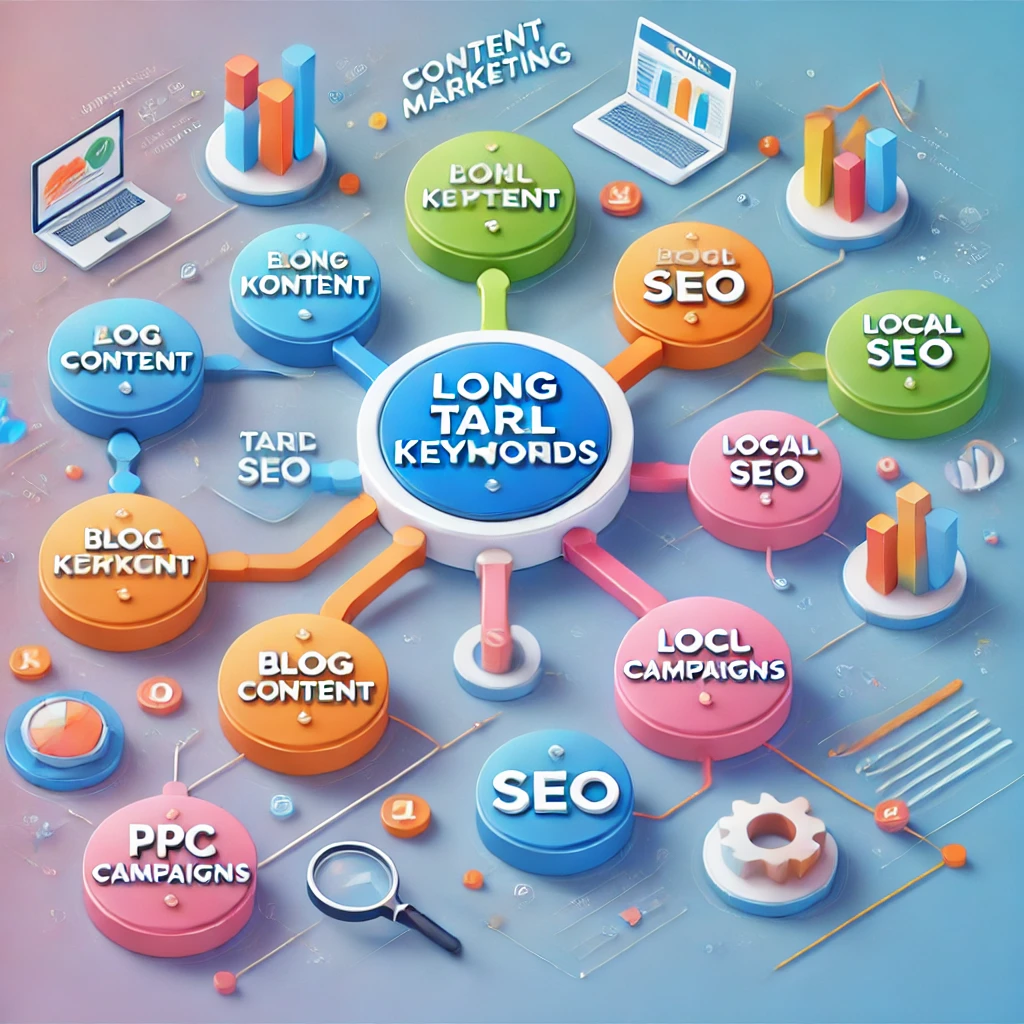
Strategies for Using Long-Tail Keywords
1. Blog Content Optimization
Create blog posts tailored to long-tail keywords. For example, a travel company could write a post titled "Top 10 Budget-Friendly Destinations for Solo Travelers in 2024."
2. Targeted PPC Campaigns
Long-tail keywords can significantly lower the cost-per-click (CPC) of your paid campaigns, as they face less competition. Use them to refine your ad targeting for better ROI.
3. FAQ Sections
FAQs naturally incorporate long-tail keywords and improve on-page SEO. Answering questions like "How do I choose the best laptop for graphic design?" can attract organic traffic.
4. Local SEO Optimization
Pair long-tail keywords with location terms to dominate local search results. Example: "best coffee shops with Wi-Fi in Austin."
5. Content Clusters
Build pillar content surrounded by cluster articles targeting related long-tail keywords. For instance, a pillar article on "Healthy Eating" could link to cluster posts like "Low-Carb Recipes for Beginners" and "The Best High-Protein Snacks for Weight Loss."
Common Mistakes to Avoid
- Keyword Stuffing: Overusing keywords can make your content unreadable and hurt your rankings. Focus on natural incorporation.
- Ignoring Search Intent: Not aligning your content with what users want can lead to poor engagement.
- Choosing Keywords with No Traffic: Always verify that your chosen long-tail keywords have some search volume.
- Neglecting Analytics: Regularly review your data to see what’s working and refine your strategy.
The Future of Long-Tail Keywords
As search engines become smarter, understanding user intent will matter more than ever. Voice search and AI-driven tools like ChatGPT are pushing users towards natural, conversational queries. To stay ahead, focus on creating content that answers these specific queries in a clear, engaging manner.
FAQs: All About Long-Tail Keywords
1. What are long-tail keywords?
Long-tail keywords are specific, detailed search phrases like "affordable wedding dresses for petite brides." They cater to niche audiences and intent-driven searches.
2. Why are long-tail keywords important?
They have less competition, better match user intent, and often result in higher conversion rates compared to short-tail keywords.
3. How do I find long-tail keywords for my website?
Use tools like Google Keyword Planner, explore search query data, and look at Google’s autocomplete suggestions or related searches.
4. Can I use long-tail keywords in paid ads?
Absolutely! Long-tail keywords lower CPC and improve targeting precision in PPC campaigns.
5. How many words are in a typical long-tail keyword?
They usually range from 3 to 6 words but can sometimes be longer depending on the niche.
6. Do long-tail keywords work for local SEO?
Yes! Combining long-tail keywords with location-specific terms helps attract local customers.
7. Are long-tail keywords effective for small businesses?
Yes, they allow small businesses to compete by targeting specific, less competitive niches.
8. How do voice searches impact long-tail keyword use?
Voice search tends to use conversational and natural phrases, which align well with long-tail keywords.
9. Can I use multiple long-tail keywords in one article?
Yes, as long as they are relevant and integrated naturally into the content.
10. How can I measure the success of my long-tail keyword strategy?
Track metrics like organic traffic, keyword rankings, and conversion rates using tools like Google Analytics.