



Why Link Quality Matters More Than Quantity in SEO
Table of Contents
- Introduction
- What Is Link Quality in SEO?
- Link Quality vs. Link Quantity: Understanding the Difference
- Why Quality Links Impact SEO Rankings
- Benefits of Prioritizing Link Quality
- How to Identify High-Quality Links
- Effective Link-Building Strategies Focused on Quality
- Common Mistakes in Link Building to Avoid
- Link Quality and SEO: Key Metrics to Track
- Case Studies: Success Stories of Quality-First Link Building
- Conclusion
- Frequently Asked Questions
Introduction
In the world of SEO, link building remains a cornerstone of ranking strategies. However, a crucial distinction must be made between the quality of links and their sheer quantity. While it may seem logical that more links would equate to better rankings, this isn’t the case. High-quality, relevant links from trusted sites drive much more impact on SEO success than hundreds of low-quality links. In this article, we’ll explore why link quality is more important than quantity, how it affects rankings, and strategies to build a quality-focused link profile for your website.
What Is Link Quality in SEO?
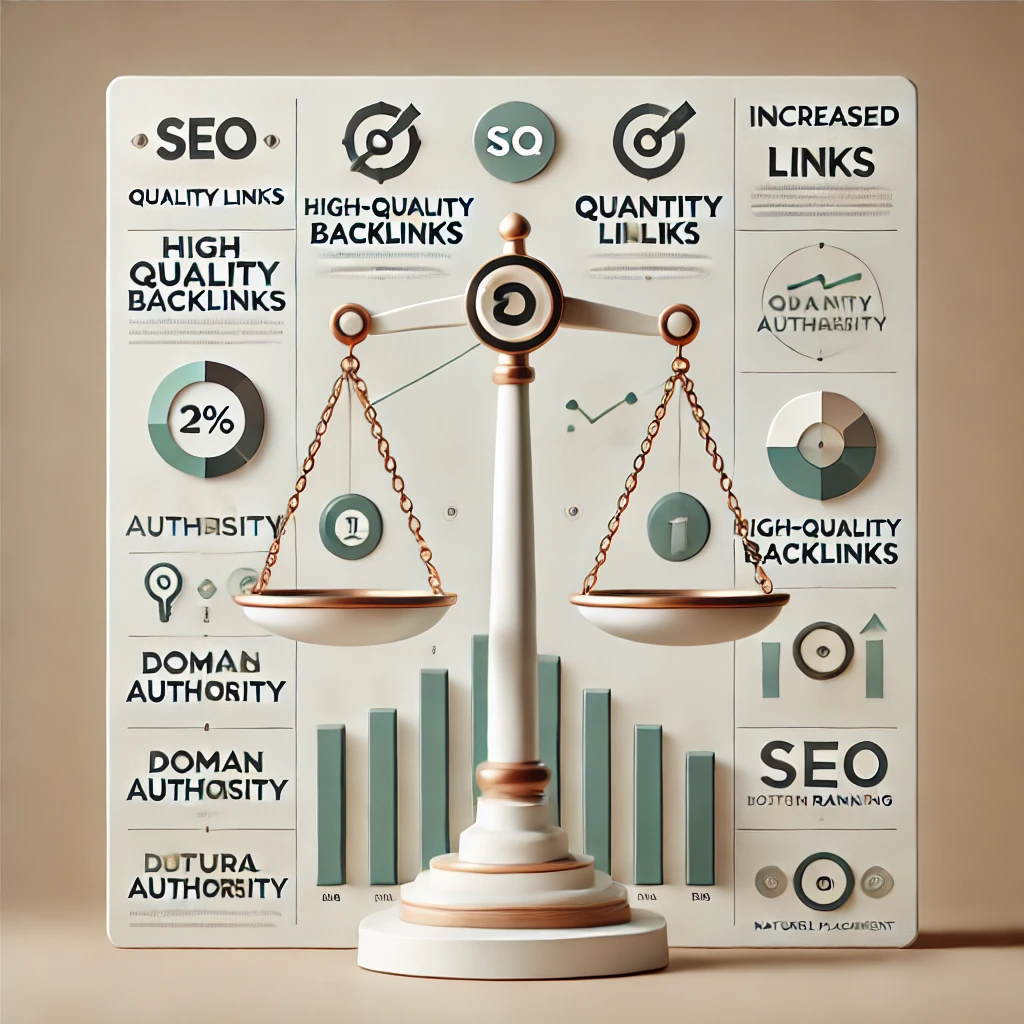
Link quality refers to the authority, relevance, and trustworthiness of the websites linking back to your site. A high-quality link comes from a reputable site that is relevant to your content, has strong domain authority, and follows Google’s guidelines. These links are more valued by search engines, as they indicate that your content is credible, valuable, and trustworthy.
Link Quality vs. Link Quantity: Understanding the Difference
While both link quality and quantity can impact SEO, they do so in very different ways:
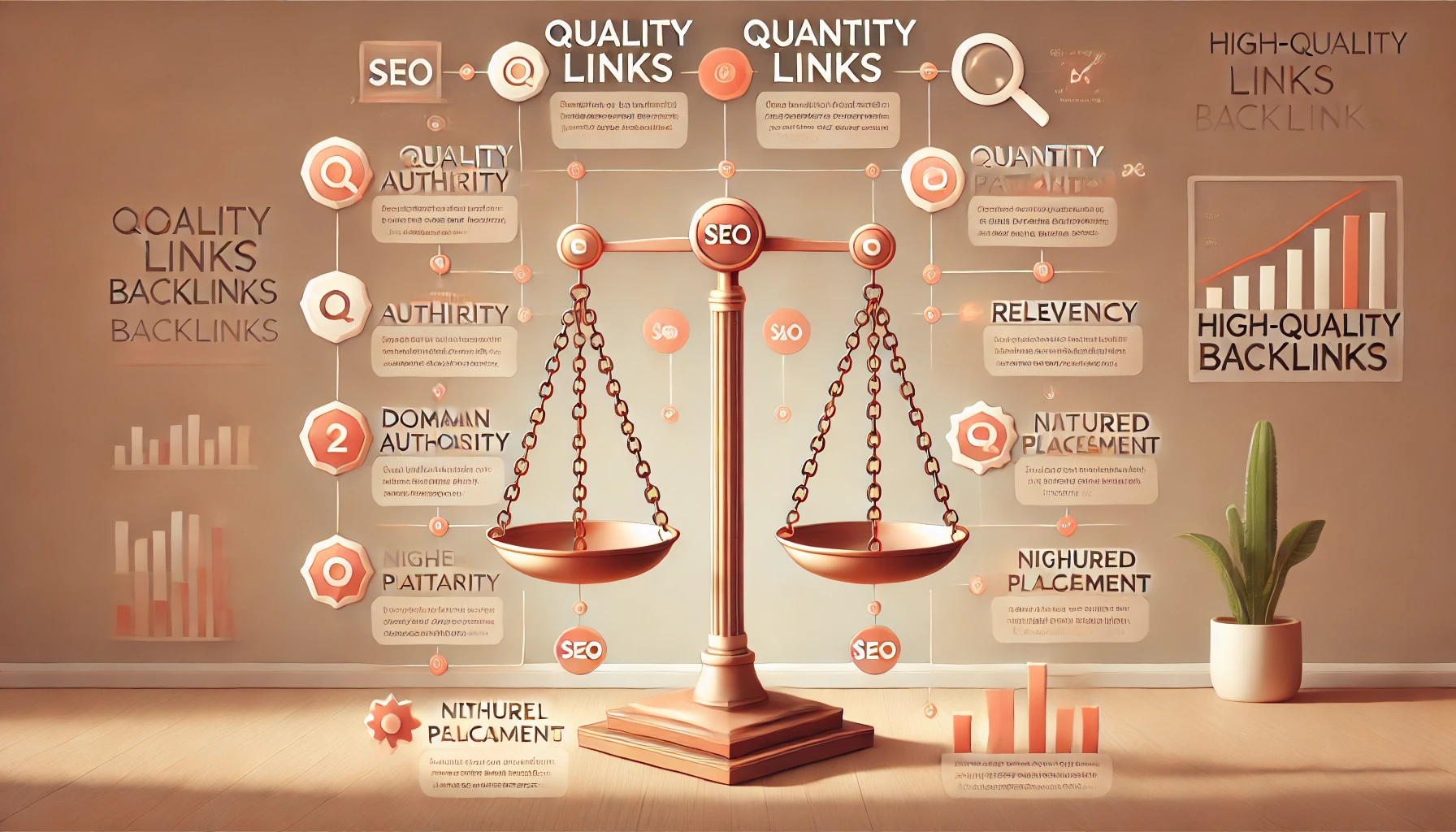
- Quality: High-quality links come from established, credible websites with high domain authority. These links are highly valued by search engines and can significantly boost your site’s rankings.
- Quantity: Link quantity focuses on the number of backlinks. While having a larger number of links might seem beneficial, too many low-quality links can lead to penalties and reduce your site’s trustworthiness.
Investing in a few high-quality links can create far more impact than generating numerous low-quality ones.
Why Quality Links Impact SEO Rankings
- Higher Trustworthiness: Links from authoritative sources build trust with search engines. They signal that other credible sites vouch for your content, boosting your site’s reputation.
- Increased Relevance: High-quality links are often from sites within your niche. This relevance aligns with Google’s algorithms, which favor content that is thematically connected.
- Long-Term SEO Benefits: Quality links are less likely to be penalized by Google updates, providing a more sustainable SEO strategy. Unlike spammy or low-quality links, quality links stand the test of time.
- Better User Experience: High-quality links tend to drive genuine traffic from users who are interested in the content. This improves site metrics like time on page, bounce rate, and overall engagement.
Benefits of Prioritizing Link Quality
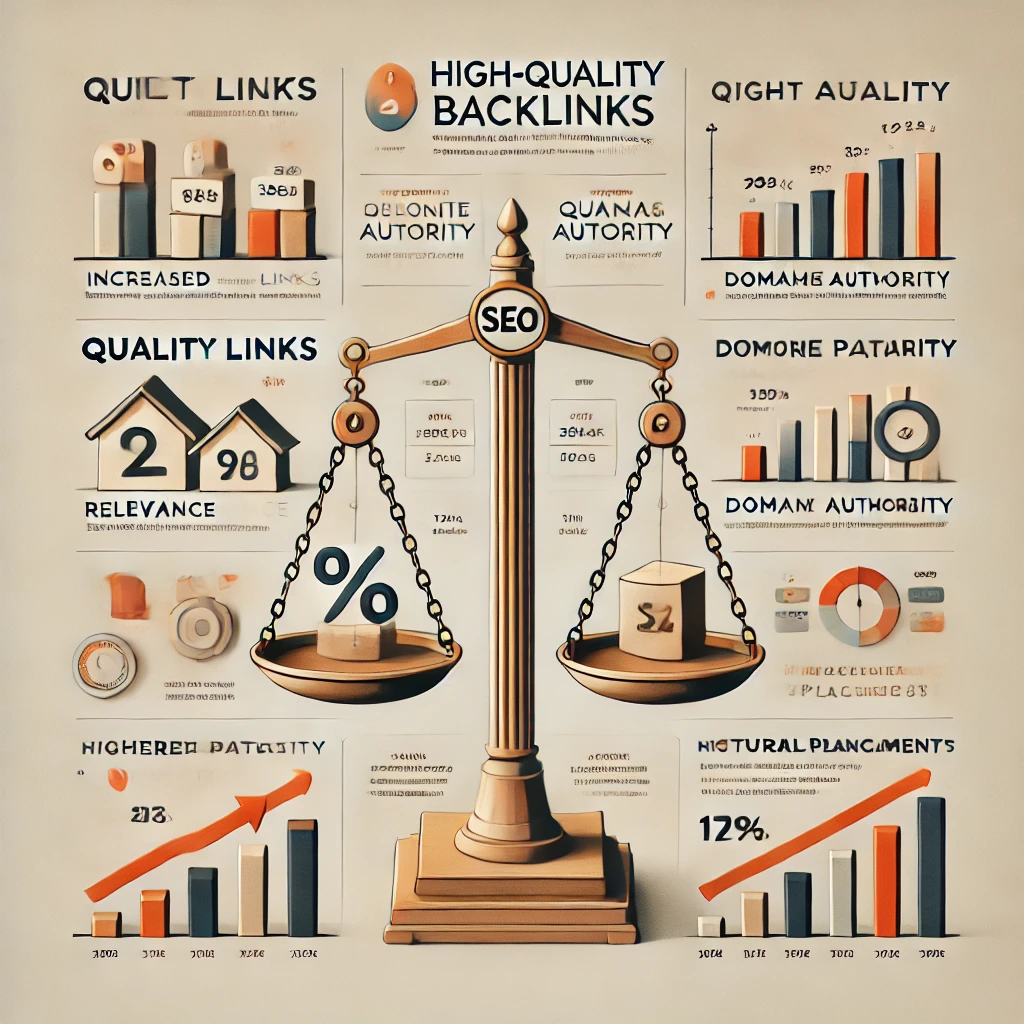
- Improved Rankings: Quality links from authoritative sites are one of the strongest factors in ranking algorithms.
- Enhanced Organic Traffic: Quality links drive relevant traffic from users genuinely interested in your content or product.
- Reduced Risk of Penalties: Low-quality link building can lead to penalties from search engines, harming your site’s visibility.
- Better Conversions: Targeted, relevant traffic often leads to better conversions, as these users are more likely to take action on your site.
How to Identify High-Quality Links
Understanding what makes a link high quality can help in crafting a winning link-building strategy. Here are some key factors:
- Domain Authority (DA): High DA sites have stronger influence over SEO rankings. Tools like Moz’s Domain Authority metric can help assess the authority level.
- Relevance: Links from sites that share your niche or industry carry more weight than those from unrelated sites.
- Traffic Quality: A high-quality backlink should drive real, relevant traffic to your site, enhancing your engagement metrics.
- Natural Placement: Links should be placed naturally within content. Avoid links from spammy, low-quality sites or any links that seem forced or irrelevant to the content.
- Editorial Links: Links given editorially (i.e., naturally, by site editors) tend to be more valuable, as they indicate that the link was earned due to content merit.
Effective Link-Building Strategies Focused on Quality
- Guest Posting on Reputable Sites: Writing valuable content for reputable sites allows you to build high-quality, contextual backlinks.
- Building Resource Pages: Create pages with useful resources, guides, and tools, as other sites often link to quality resources.
- Outreach to Relevant Influencers and Bloggers: Connect with influencers and bloggers in your industry, offering to share or collaborate on content that benefits their audience.
- Broken Link Building: Identify broken links on reputable sites and offer your content as a replacement, helping both the site and your SEO.
- High-Value Content Creation: Creating exceptional content that naturally attracts links is a powerful way to gain high-quality backlinks. Original research, detailed guides, and unique insights often attract links without outreach.
Common Mistakes in Link Building to Avoid
- Quantity Over Quality: Avoid aiming solely for high link counts; focus on building quality links instead.
- Link Exchanges or Buying Links: These practices violate Google’s guidelines and can lead to penalties.
- Ignoring Relevance: Links from irrelevant sites carry less weight and may signal manipulative practices to search engines.
- Relying on Automated Link-Building Tools: Automated tools often generate low-quality links that can lead to penalties. Always prioritize manual, genuine link-building efforts.
Link Quality and SEO: Key Metrics to Track
To monitor the effectiveness of your quality-first link-building strategy, track the following key metrics:
- Domain Authority: Keep tabs on the DA of linking sites using tools like Moz or Ahrefs.
- Referral Traffic: High-quality links often lead to meaningful referral traffic. Google Analytics can help you track this traffic.
- Click-Through Rate (CTR): A higher CTR indicates that your backlinks are driving genuine interest and engagement.
- Conversion Rate: Monitor how many visitors from your backlinks convert, as this indicates quality traffic.
- Link Growth Velocity: Rapid link growth can look unnatural; focus on steady, sustainable growth in your link profile.
Case Studies: Success Stories of Quality-First Link Building
- Case Study 1: A local business that shifted from quantity-focused link building to quality links saw a 45% increase in organic traffic over six months.
- Case Study 2: An eCommerce brand prioritized link quality by collaborating with niche influencers, resulting in a 30% boost in keyword rankings and higher conversion rates.
- Case Study 3: A tech blog replaced low-quality, high-volume links with a few authoritative links from industry publications, which contributed to a 50% increase in traffic and engagement.
Conclusion
Focusing on link quality over quantity is one of the most effective ways to enhance your SEO and secure long-term rankings. High-quality links, crafted through genuine engagement, not only improve your site’s authority but also drive valuable traffic. Remember that the best links are earned through excellent content, industry connections, and strategic outreach rather than sheer numbers. Building a solid link profile focused on quality ensures a more resilient SEO presence that withstands algorithm changes and supports sustainable growth.
Frequently Asked Questions About Link Quality
1. What is link quality, and why is it important for SEO?
Answer: Link quality refers to the value and authority of a backlink. Quality links come from reputable, relevant sites, which search engines value highly, making them crucial for SEO success.
2. How can I assess the quality of a backlink?
Answer: Assess link quality using metrics like domain authority, relevance, natural placement, and the quality of the site’s traffic.
3. Why is link quantity less important than quality?
Answer: High link quantity from low-quality sites can lead to penalties. Quality links, on the other hand, boost rankings and user trust, providing sustainable SEO benefits.
4. What is a high-quality link?
Answer: A high-quality link is a backlink from an authoritative, relevant, and trusted site that naturally fits within the content, adding value to readers.
5. What happens if I buy low-quality links?
Answer: Purchasing low-quality links is against Google’s guidelines, which can lead to penalties or removal from search results, damaging your SEO efforts.
6. How many links do I need to rank higher on search engines?
Answer: The number of links needed varies, but quality matters far more than quantity. A few high-quality links are usually more impactful than many low-quality ones.
7. Can low-quality links hurt my website’s SEO?
Answer: Yes, low-quality links can lead to penalties and harm your website’s credibility, ultimately lowering your rankings.
8. How do I build high-quality backlinks?
Answer: Focus on creating valuable content, guest posting on reputable sites, collaborating with influencers, and conducting outreach to relevant sites in your industry.
9. Should I remove low-quality links from my site?
Answer: Yes, if you identify spammy or irrelevant links, it’s a good idea to disavow them to prevent penalties and improve your site’s trustworthiness.
10. How can I track the performance of my backlinks?
Answer: Use tools like Google Analytics, Ahrefs, and Moz to monitor metrics such as referral traffic, domain authority, and click-through rates for each backlink.